|


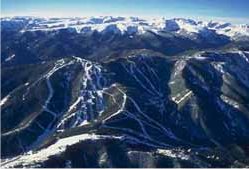
| Grizzly Peek, Beartooth Mtns, Red Lodge, Mt. |

|
| Home of 147.000Mhz., Repeater Elevation: 7,390 Ft. |

To the Internet Home
of BARC.
We invite you to use the WB7RIS
147.000Mhz. (+ 600 Offset) Repeater at any time.
(Note
at the moment the 147.000Mhz. Repeater is off air until we get a replacement repeater back up on the Mountain).
The Barc Repeater is an open
repeater and may be used by all. (Note no CTCSS Tone or {PL Tone}
is not needed to operate the repeater).
The repeater is located on Grizzly
Peak above Red Lodge Montana at an altitude of 7,390 feet. With Coverage from Red Lodge, Mt. & Billings, Mt. then South
into Northern Wyoming, West to Big Timber, Mt. and East to Hardin, Mt. and beyond.
Be sure to check into the Wednesday evening Technical Net at 8:00 pm.
73
and thanks for visiting our site. From Repeater Trustee K7ZXX Melvin.

Thanks Paul N0NBH for your Solar-Terrestrial Data and Propagation forcasts.
Solarcycle #24

Just what do the above numbers mean?
While increasing SFI may be good for HF propagation, it also tends to correspond with high Ap and K indices, which cause
D-Layer absorption and noisy band condition. Solar flux is measured in solar flux units (SFUs). It is the amount
of radio noise or flux emitted at a frequency of 2800 MHz (10.7 cm, hence is it also called the 10.7 cm flux index).
Just what is the Planetary A index? It is a measure of how disturbed the Earth's magnetic
field is. It varies in value from 0 to about 400, in linear steps. It is computed from the actual deviations (non-quiet-time
deviations) measured at a number of geomagnetic observatories (mostly mid-latitude ones) around the world. A value of 30 represents
minor storm conditions. Values of 50 represent major storm conditions and values greater than 100 represent severe storm
conditions. It is derived from the planetary K indices (Kp). The A index is a planetary daily value, while the Kp index
is a planetary measurement derived every 3 hours. The Kp index is a semi-logarithmic index that varies from 0 to 9, where
a 5 represents minor storm conditions, a 6 represents major storm conditions, and a value of 7 or greater represents severe
storm conditions.
The K-index is a code that is related to the maximum fluctuations of horizontal components observed
on a magnetometer relative to a quiet day, during a three-hour interval. The conversion table from maximum fluctuation (nT)
to K-index, varies from observatory to observatory in such a way that the historical rate of occurrence of certain levels
of K are about the same at all observatories. In practice this means that observatories at higher geomagnetic latitude require
higher levels of fluctuation for a given K-index. The maximum positive and negative deviations during the 3-hour period
are added together to determine the total maximum fluctuation. These maximum deviations may occur anytime during the 3-hour
period.
The higher the K-index, the more unstable propagation becomes, the effect is stronger
at high latitudes, but weaker near low latitudes. When storm level is reached, propagation strongly degrades, possibly
fade out at high latitudes. Classification of K-indices are as follows:
K0=Inactive K1=Very quiet K2=Quiet K3=Unsettled K4=Active K5=Minor storm K6=Major
storm K7=Severe storm K8=Very severe storm K9=Extremely severe storm
As with the K-index, the higher the A-index, the more unstable propagation becomes. Classification
of A-indices are as follows:
A0 - A7 = quiet A8 - A15 = unsettled A16 - A29 = active A30 - A49 = minor
storm A50 - A99 = major storm A100 - A400 = severe storm
The solar cycle, or the solar magnetic activity cycle, is a periodic change in the amount of irradiation from the Sun that is experienced on Earth. It has a period of about 11 years, and is one component of solar variation, the other being aperiodic fluctuations. Solar variation causes changes in space weather and to some degree weather and climate on Earth. The cycle is observed by counting the frequency and placement of sunspots visible on the Sun. Powered by a hydromagnetic dynamo process, driven by the inductive action of internal solar flows, the
solar cycle:
For the current Auroral Activity click the links below:
http://www.swpc.noaa.gov/pmap/pmapN.html
http://spaceweather.com/
Frequently Asked Questions about Aurora and Answers


|
| Dipole Antenna |
Amateur Radio Study Material Resources:
The ARRL Ham Radio License Manual,
The ARRL Ham Radio License Course.
Technician & General Software Value Package.
How to become a Volunteer Examiner and what is a (VE)?
Volunteer Examiners are licensed radio amateurs holding a General Class license or higher who offer their time to administer
the FCC licensing tests. Learn how you can become a VE associated with the ARRL Volunteer Coordinator office (VEC) by
reviewing the A.R.R.L VE Manual.
Relying on the training and experience of ARRL VEs who conduct FCC license exams, ARRL also authorizes our VEs to conduct
exam sessions for ARRL's Amateur Radio Emergency Communcations Course. An additional registration with ARRL's Continuing
Education Program is required. Find more information at EmComm Field Exam Resources.
W5YI-VEC : Amateur Examiners:


|
|

| Contact us at our email address below. |

|
| BeartoothARC@gmail.com |
This site was last updated on May 20, 2013
**BARC Web inception date
March 17, 2003**
Legal
disclaimer:
Note: The information contained in this site is for general use on Amateur
Radio matters of interest only. While we here at BARC have made every attempt to ensure that the information contained in
this site has been obtained from reliable sources. We are not responsible for any errors or omissions, or for the results
obtained from the use of this information. All information in this Site is provided "as is", with no guarantee of completeness,
accuracy, timeliness or of the results obtained from the use of this information, and without warranty of any kind, express
or implied, including, but not limited to warranties of particular purpose. Anyone who may use any information from
this website and the information is not correct does so at their own peril. Certain links in this Site connect to other Web
Sites maintained by third parties over whom Beartooth Amateur Radio Club and or KF7SN has no control and makes
no representations as to the accuracy or any other aspect of information contained in other Web Sites. BARC operates this website as a free service to all Radio Amateurs and prospective Radio Amateurs.
The
Beartooth Amateur Radio Club, KF7SN, K7ZXX or any member will not be held responsible or libel in any way or manner for this
information on this web site, which may also include bad or dead links.
(If
you find any dead links please report them directly to KF7SN BARC Webmaster / Administrator). BeartoothARC@gmail.com
Beartooth Amateur Radio
Club website is solely owned, created and managed by Geary KF7SN.

|
| Web Stats Domain Ratings for this web site. |
|
|